 globalgrillguidecom
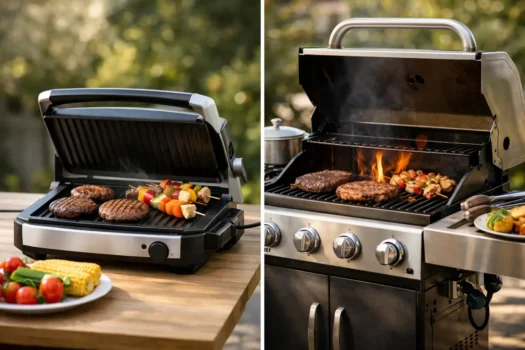
You can waste a lot of money buying the wrong kind of convenience. That is really what the electric grill vs gas decision comes down to. Both promise easier grilling than charcoal, but they solve different problems, and the wrong choice shows up fast in weak searing, frustrating preheat times, fuel hassles, or a grill that simply does not fit where you live.
If you are choosing between these two, skip the marketing language. The better question is not which grill type is “best.” It is which one matches your space, your cooking habits, and how much performance you actually expect.
Table of Contents
Electric grill vs gas: the real difference
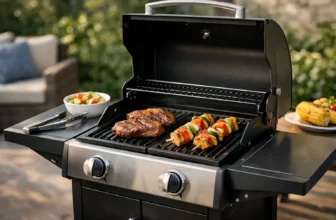
Gas grills are built around output and flexibility. Even modest models can generate enough heat for burgers, chicken, vegetables, and basic searing, and larger units give you more cooking area, better recovery when the lid opens, and more control for indirect cooking. For many backyard cooks, gas is the default because it handles weeknight dinners and weekend hosting without much drama.
Electric grills are built around access and simplicity. They plug in, avoid propane refills, and often fit places where open-flame cooking is restricted or impractical. That matters more than people think. If you live in a condo, apartment, or townhouse with tight rules, an electric grill may not be a compromise so much as your only realistic path to grilling at home.
That difference shapes everything else. Gas usually wins on raw cooking performance. Electric often wins on convenience, storage, and compatibility with smaller living spaces.
Heat output and cooking performance
If your priority is strong grilling performance, gas has the edge.
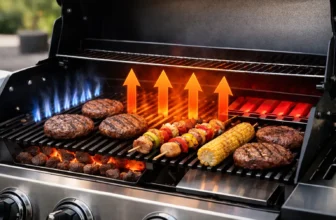
A good gas grill preheats faster, reaches higher temperatures more easily, and recovers better after you flip food or load a cold batch of meat onto the grates. That recovery matters in real cooking. It is the difference between getting decent browning on a second round of burgers and watching them steam while the grill struggles to climb back up.
Electric grills can cook well, but they are usually more limited by household power. In plain terms, there is only so much heat you can get from a standard outlet. That does not make electric useless. It does mean you should be realistic. Electric grills are generally better for smaller portions, thinner cuts, vegetables, sausages, shrimp, and steady everyday cooking than for aggressive steakhouse-style searing.
This is where buyers get tripped up. A lot of electric units are sold with photos that suggest they perform like a full-size gas cart grill. Many do not. Some tabletop and compact electric models produce respectable results, but few match a solid gas grill for heat intensity and overall versatility.
If you regularly cook for four or more people, like thick steaks, or want one grill that can handle direct and indirect setups with fewer compromises, gas makes more sense.
What about flavor?
Neither fuel type gives you charcoal flavor, so this is not a contest between smoke and no smoke. It is more subtle than that.
Gas grilling creates real flame-based heat, grease vaporization, and more of the classic grilled character most people expect. Electric grills can still brown food and deliver grill marks, but the flavor is often a little cleaner and less pronounced. That is not automatically bad. For fish, vegetables, and quick weeknight meals, some cooks actually prefer the cleaner profile.
Still, if your idea of grilling includes more pronounced browning and that familiar outdoor-grill taste, gas tends to feel more satisfying.
Ease of use and day-to-day convenience
Electric wins this category for the right buyer.
There is no propane tank to refill, no burner ignition issues, and usually less assembly. Plug it in, preheat, cook, and shut it off. For people who grill occasionally or want something simple enough that they will actually use it on a Tuesday night, that low friction matters.
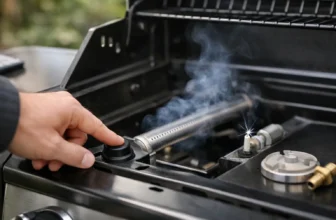
Gas is still convenient compared with charcoal, but ownership has more moving parts. You have burners, igniters, hoses, regulator issues, grease management, and fuel planning. None of that is hard, but it is real. If you forget to refill a propane tank before a cookout, convenience disappears fast.
The trade-off is that gas gives you more capability in exchange for a little more ownership responsibility. Electric gives you less hassle, but usually with lower performance ceilings.
Space, rules, and where the grill will live
For many buyers, this is the deciding factor before performance even enters the conversation.
Gas grills need safe outdoor placement and enough room for storage and use. If you have a backyard, patio, or deck where gas grilling is allowed and practical, great. If you have limited outdoor space or strict building rules, gas can become a headache.
Electric grills are much easier to fit into smaller living setups. They are often more compact, easier to move, and commonly accepted in places where propane grills are restricted. You still need to verify local rules and manufacturer guidance, but electric clearly has the advantage for dense residential living.
That is why electric is often the smarter buy for apartment dwellers, even if gas is the better pure cooking tool. A grill you are allowed to use is better than a more powerful one that stays in the box.
Cleanup and maintenance over time
Neither option is maintenance-free, despite how some product pages make it sound.
Electric grills often have simpler interiors and fewer parts that fail from heat exposure, flame, or grease interacting with burners. Many have removable trays and components that are easier to wash in a sink. That said, compact electric designs can still be annoying if grease channels are shallow or if heating elements make access awkward.
Gas grills usually require more ongoing care. Burners clog. Igniters fail. Flavorizer bars, heat tents, and grates wear out. Grease systems need regular attention. The better the grill is built, the less frustrating this becomes, but long-term gas ownership is still more maintenance-heavy than electric.
Build quality matters a lot here. A cheap gas grill can become a rusting, uneven-heating mess faster than buyers expect. A decent electric grill with fewer components may outlast it simply because there is less to go wrong. At Global Grill Guide, this is one of the most common gaps between showroom appeal and real ownership.
Operating cost and long-term value
The upfront price range overlaps, but ownership costs differ.
Electric grills avoid propane refills, and the electricity cost per cook is usually manageable for home use. If you grill lightly and value simplicity more than maximum output, electric can be a cost-effective choice.
Gas brings recurring fuel costs, plus more replacement parts over time. But value is not just about utility bills. If a gas grill lets you cook larger meals, get better results, and avoid upgrading later, it may still be the better long-term purchase.
This is where honest self-assessment matters. If you grill twice a month and mostly cook burgers, vegetables, and chicken breasts for two people, a well-chosen electric grill may be all you need. If you host often, cook larger cuts, or care a lot about heat performance, buying electric to save money can turn into buying twice.
Who should buy electric, and who should buy gas?
Buy electric if your space is limited, your building rules make flame grilling difficult, or you want the simplest possible ownership experience. It also makes sense if you cook smaller amounts of food and care more about convenience than maximum heat.
Buy gas if you have the space, want stronger overall performance, and expect your grill to handle a wider range of cooking jobs. Gas is the better fit for households that grill often, cook for groups, or want something closer to a traditional outdoor grilling experience.
There is also a middle ground. Some buyers keep an electric grill because it works with their current living situation, then move to gas later when they have more space. That is a reasonable path. What is not reasonable is expecting a compact electric unit to replace a full-size gas grill in every scenario.
Electric grill vs gas: the better choice for most people
For most homeowners with enough outdoor space and no major restrictions, gas is the better all-around choice. It is more capable, more flexible, and better suited to the kind of cooking people usually picture when they say they want a grill.
But “most people” is not the same as “you.” If your reality is a small balcony, strict HOA rules, limited storage, or a strong preference for low-maintenance cooking, electric may fit your life better and get used more often. That matters more than theoretical peak performance.
The smartest grill purchase is the one that matches your actual setup, not your idealized one. Buy for the way you cook now, the space you really have, and the maintenance you are honestly willing to handle. That choice holds up a lot longer than chasing specs.
Electric Grill vs Gas Grill Comparison
| Feature | Electric Grill | Gas Grill | Best Choice |
|---|---|---|---|
| Heat Output | Moderate, limited by household power | High heat with faster recovery | Gas |
| Preheat Time | 10–20 minutes | 10–15 minutes | Gas |
| Searing Ability | Good for thinner cuts, limited for thick steaks | Excellent for steaks and burgers | Gas |
| Cooking Capacity | Best for 1–4 people | Handles families and large gatherings easily | Gas |
| Flavor | Cleaner taste with lighter browning | Traditional grilled flavor from open flame | Gas |
| Ease of Use | Plug in and cook—no fuel required | Requires propane or natural gas | Electric |
| Maintenance | Fewer parts, generally easier to clean | Burners, igniters, and grease systems require more upkeep | Electric |
| Operating Cost | Uses household electricity | Ongoing propane or gas costs | Electric |
| Portability & Storage | Compact and lightweight | Larger footprint, less portable | Electric |
| Apartment/Condo Friendly | Often allowed where open flames are restricted | Frequently prohibited by building rules | Electric |
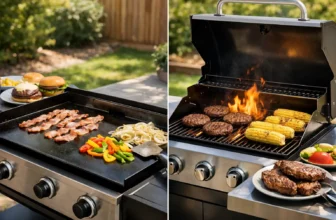
| Versatility | Great for everyday grilling | Better for direct, indirect, and high-heat cooking | Gas |
| Best For | Apartments, balconies, casual grilling, convenience | Homeowners, families, entertaining, traditional grilling | Depends on your space and cooking style |
FAQ
Is an electric grill as good as a gas grill?
It depends on your priorities. Electric grills are easier to use and ideal for apartments or balconies, while gas grills provide higher temperatures, faster preheating, and better overall grilling performance.
Do electric grills get hot enough to sear steaks?
Some premium electric grills can produce good grill marks and decent browning, but most cannot match the high heat or searing performance of a quality gas grill.
Which grill is cheaper to operate: electric or gas?
Electric grills generally have lower operating costs for occasional home use because they don’t require propane refills. Gas grills have recurring fuel expenses but often offer better cooking performance.
Are electric grills allowed on apartment balconies?
In many apartments and condominiums, electric grills are permitted where propane or charcoal grills are prohibited. Always check your local fire codes, HOA rules, and building regulations before purchasing.
Who should choose an electric grill instead of a gas grill?
An electric grill is a smart choice if you have limited outdoor space, live in a condo or apartment, want minimal maintenance, or typically cook small meals for one to four people. Gas grills are generally better for larger households and frequent outdoor entertaining.