 globalgrillguidecom
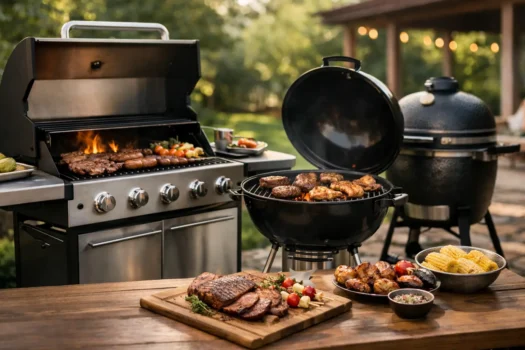
A grill that looks great on a showroom floor can become a frustrating piece of patio furniture after three cookouts. Thin grates warp, burners clog, ash piles up, and temperature gauges tell stories rather than facts. This grill buying guide starts where the marketing usually stops: with how the grill will actually cook, clean up, and hold up over time.
The best grill is not automatically the largest, hottest, or most expensive model. It is the one that fits the way you cook on a normal weeknight, has enough capacity for the people you feed, and does not make maintenance feel like a chore you keep putting off.
Table of Contents
Start With How You Actually Cook
Before comparing burner counts, cooking area, or smart features, think about your normal routine. Are you cooking burgers and vegetables for four people twice a week? Do you host larger weekend gatherings? Are you chasing low-and-slow barbecue, or do you mostly want dinner on the table in 30 minutes?
A buyer who wants fast, repeatable weeknight meals will usually be better served by gas or electric than by a charcoal kettle. A buyer who enjoys managing a fire and wants strong smoke flavor may find gas convenient but uninspiring. Pellet grills are easier than charcoal for long cooks, but they are not maintenance-free and may not provide the hard, direct sear some buyers expect.
Space matters just as much. Measure the patio area, including room to open the lid, access the grease tray or ash catcher, and move safely around a hot grill. Do not buy a large cart-style grill because it looks capable if it will leave your outdoor space cramped. Likewise, a compact grill may be a poor value if you regularly cook for eight people and need to run multiple batches.
Grill Buying Guide: Choose the Right Fuel Type
Fuel type changes the entire ownership experience. There is no universal winner, only better and worse fits for your habits.
Gas grills: best for speed and familiar control
Gas grills are the practical choice for many households. They ignite quickly, warm up faster than charcoal, and let you adjust heat with a knob. That makes them well suited to chicken, burgers, fish, vegetables, and regular weeknight use.
The trade-off is that gas grills have more parts that can wear out. Burners, igniters, heat diffusers, valves, hoses, and grease-management components all need periodic attention. A low-priced gas grill can be tempting, but thin stainless steel, weak burners, and poor grease routing often show their limits within a few seasons.
Look beyond total BTU claims. High BTU numbers do not guarantee better cooking. What matters is whether the grill heats evenly, holds heat with the lid closed, and has burners that allow useful heat zones. A well-built two-burner grill can outperform a poorly designed four-burner model.
Charcoal grills: best for fire-driven flavor and versatility
Charcoal rewards patience. It can produce excellent searing heat, genuine live-fire flavor, and the flexibility to cook directly over coals or indirectly for longer roasts. A basic kettle can handle far more than hot dogs if its vents, lid fit, and charcoal arrangement are used properly.
The cost is time and mess. You need to light the charcoal, wait for it to settle, manage airflow, and dispose of ash safely. Temperature control takes practice, especially in wind or cold weather. For buyers who grill once a month and want dinner fast, charcoal can become more work than enjoyment.
Pay close attention to airflow controls, ash removal, grate stability, and lid fit. Those details affect every cook. A cheap charcoal grill with loose vents and a shallow ash pan is not a bargain when it burns fuel inefficiently and makes cleanup unpleasant.
Pellet grills: best for hands-off smoking
Pellet grills use compressed wood pellets and an electric controller to feed fuel and manage temperature. Their biggest advantage is consistency during long cooks. Brisket, ribs, pork shoulder, and whole poultry become more approachable when the grill can hold a steady temperature without constant fire tending.
Their weak spot is high-heat grilling. Some pellet grills can sear adequately, especially with direct-flame features or a separate sear station, but many do not match the intense direct heat of charcoal or a strong gas grill. They also need electricity, dry pellet storage, regular ash removal, and periodic inspection of the auger and fire pot.
Buy a pellet grill for smoking first. Treat high-heat searing as a bonus unless the grill has proven direct-heat capability.
Electric grills: best for restricted spaces
Electric grills make sense where open flames are prohibited or impractical, such as some apartments, condos, balconies, and small patios. They are simple to operate and produce no charcoal ash or propane tank concerns.
Their limitations are straightforward: lower peak heat, less smoke flavor, and less capacity on many models. An electric grill can be a useful cooking tool, but it should not be bought with the expectation that it will perform exactly like a charcoal or gas grill.
Build Quality Shows Up After the First Season
A grill’s finish can hide weak construction. Open the lid, move the shelves, pull the grates, and inspect the cabinet or cart. Wobble, sharp edges, thin metal, loose fasteners, and flimsy wheels are warning signs. They are not minor cosmetic flaws when the grill lives outdoors and gets hot repeatedly.
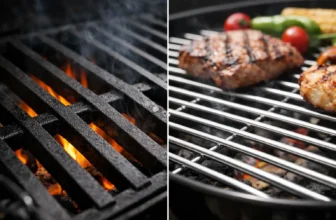
Cooking grates deserve special attention. Cast iron stores heat well and produces strong sear marks, but it needs seasoning and can rust if neglected. Stainless steel is easier to maintain and generally lasts well, though lighter stainless grates may not retain as much heat. Porcelain-coated cast iron can work well, but chipped coating eventually exposes metal underneath.
Do not assume every product labeled stainless steel is equally durable. Grade, thickness, construction, and protection from standing moisture all matter. A grill cover helps, but it cannot rescue poor materials or a grill left in a puddle all winter.
Prioritize Temperature Control Over Headline Power
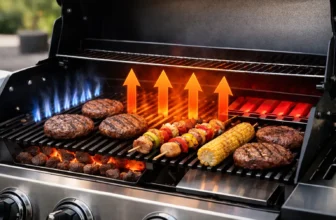
Good grilling depends on control. You need a hot zone for searing and a cooler zone to finish thicker food without burning the outside. On gas grills, that means independently controlled burners and a lid that retains heat. On charcoal grills, it means adjustable vents and enough room to bank coals to one side. On pellet grills, it means a controller that holds steady temperatures and recovers reasonably after the lid is opened.
A built-in lid thermometer is useful only as a rough reference. It measures air near the lid, not the temperature at the cooking grate and certainly not the internal temperature of your food. Plan on owning a reliable instant-read thermometer. It is one of the few accessories that improves results across every grill type.
Also look at usable cooking space, not just the largest number printed on the box. Warming racks count toward advertised capacity, but they are not equal to primary grate space. If you cook burgers, chicken pieces, and vegetables together, flat primary cooking area is what matters.
Cleaning Is Part of Performance
Every grill gets dirty. The difference is whether the design makes cleaning manageable or turns it into a greasy, neglected problem.
Gas grills need grease trays that are easy to reach and remove. Check whether drippings are routed away from burners and whether replacement liners are a convenience rather than a necessity. Pellet grills need ash cleared from the fire pot and interior, particularly before longer cooks. Charcoal grills need an ash system that does not dump dust across the patio when you empty it.
Ask yourself a blunt question: will you clean this grill often enough to keep it working safely? If the answer is no, choose the simpler design. Neglected grease can cause flare-ups and fires. Ash buildup restricts airflow. Dirty temperature probes and blocked burners create unreliable cooking.
Set a Budget for Ownership, Not Just the Grill
The purchase price is only the opening number. Factor in fuel, a cover, a thermometer, cleaning tools, replacement grates or burners, and any accessories you genuinely need. Pellet owners should account for pellet consumption and storage. Gas owners need propane refills or a natural-gas connection. Charcoal buyers need fuel, a chimney starter, and an ash tool.
For many buyers, the best value sits in the middle of the market. Entry-level grills can work, but they often sacrifice material quality and heat consistency. Premium models can be excellent, but extra size, polished trim, and specialty features do not always improve your daily cooking enough to justify the cost.
Spend more when it buys thicker construction, better burners, dependable temperature control, replaceable parts, or a design you will actually maintain. Do not spend more simply because a grill has a fashionable badge or a long list of features you will not use.
A Final Grill Buying Checklist
Before buying, make sure you can answer these questions clearly:
- What do I cook most often, and how many people do I normally feed?
- How much time am I willing to spend lighting, tending, and cleaning the grill?
- Can I create separate heat zones for searing and finishing food?
- Are the grates, burners, ash system, or grease tray accessible and replaceable?
- Will the grill fit my patio with safe working room around it?
- Can I afford the fuel, cover, tools, and maintenance that come with it?
A grill should earn its place outside by making you want to cook more, not by looking impressive under a cover. Buy for the meals you make, the cleanup you will tolerate, and the years you expect it to last. That is where real value starts.
Comparison Table: Grill Buying Guide for Real Backyard Cooking
| Factor | Gas Grill | Charcoal Grill | Pellet Grill | Electric Grill |
|---|---|---|---|---|
| Best For | Fast, convenient everyday cooking | Fire-driven flavor and versatility | Low-and-slow smoking with minimal tending | Apartments, balconies, and restricted spaces |
| Ease of Use | Excellent | Moderate learning curve | Excellent for long cooks | Excellent |
| Startup Time | Fast | Slowest | Moderate | Very fast |
| Temperature Control | Excellent with quality burners | Requires practice and airflow management | Very consistent for low-and-slow cooking | Generally simple but with lower heat output |
| High-Heat Searing | Very good to excellent | Excellent | Moderate; depends heavily on design | Limited |
| Smoke Flavor | Low | High | High | Very low |
| Long Cooks | Possible, but requires more attention | Excellent with proper fire management | Excellent | Limited |
| Maintenance | Burners, grease system, igniter, valves, and hoses require attention | Ash removal and grate/fire management | Ash removal, fire pot, auger, and pellet system need maintenance | Relatively simple |
| Fuel / Power Requirements | Propane or natural gas | Charcoal and fire starters | Wood pellets + electricity | Electricity |
| Typical Learning Curve | Low | Moderate to high | Low to moderate | Low |
| Best for Weeknight Meals | Excellent | Fair | Good | Good |
| Best for Traditional BBQ Flavor | Fair | Excellent | Excellent | Poor |
| Space Requirements | Moderate to large | Small to moderate | Moderate to large | Small |
| Main Advantage | Speed and predictable heat | Flavor and cooking flexibility | Consistent long-duration cooking | Convenience where open flames are restricted |
| Main Drawback | More mechanical parts to maintain | Slower startup and more cleanup | Needs electricity and does not always sear strongly | Lower heat and less smoke flavor |
What to Prioritize When Buying
| Buying Priority | What to Look For | Why It Matters |
|---|---|---|
| Cooking Capacity | Adequate primary grate space | Advertised total area can include warming racks that are not suitable for main cooking. |
| Temperature Control | Independent burners, adjustable vents, or a reliable controller | Consistent heat is more useful than maximum temperature. |
| Build Quality | Thick materials, sturdy lid, stable cart, quality fasteners | Outdoor grills face repeated heat, weather, and mechanical stress. |
| Cooking Grates | Cast iron, stainless steel, or quality porcelain-coated cast iron | Grate material affects heat retention, searing, maintenance, and longevity. |
| Cleaning System | Accessible grease tray, ash catcher, or fire-pot access | Easy maintenance makes it more likely that you will actually maintain the grill. |
| Replacement Parts | Available burners, grates, igniters, and other wear components | A replaceable part can extend the life of the entire grill. |
| Space | Enough room for the grill plus safe working clearance | A grill that technically fits may still be impractical to use. |
| Total Ownership Cost | Fuel, cover, thermometer, cleaning tools, and replacement parts | The purchase price is only part of the real cost. |
| Features | Only features you will genuinely use | Extra technology and accessories should not compensate for weak construction. |
| Expected Use | Match the grill to your normal meals and frequency | The best grill is the one that fits your actual cooking habits, not occasional fantasies of huge gatherings. |
FAQ: Grill Buying Guide for Real Backyard Cooking
1. What type of grill is best for backyard cooking?
There is no universal winner. Gas grills are generally best for fast, convenient weeknight cooking, charcoal grills for traditional fire-driven flavor, pellet grills for low-and-slow smoking, and electric grills for locations where open flames are restricted. Choose based on how you actually cook rather than which fuel type is marketed as superior.
2. How do I choose the right grill size?
Choose a grill based on the number of people you normally cook for, not the largest gathering you might host once a year. Make sure there is enough primary cooking space for your usual meals and enough room around the grill to open the lid, access the grease or ash system, and move safely.
3. What should I look for in a high-quality grill?
Focus on temperature control, sturdy construction, quality grates, accessible cleaning components, and replaceable parts. A solid lid, stable cart, reliable burners or vents, and well-designed grease or ash management are generally more valuable than smart features or an impressive BTU number.
4. Is an expensive grill worth it?
Not necessarily. The best value is often found in the middle of the market. Spending more makes sense when the extra money buys thicker construction, better temperature control, durable components, or readily available replacement parts. Paying for oversized cooking areas, premium finishes, or features you will rarely use may not improve your actual cooking experience.
5. What is the most important thing to consider when buying a grill?
Consider how you will use it every week. Think about your typical meals, number of people, available patio space, desired cooking time, tolerance for cleaning, and preferred flavor. A grill that is slightly less powerful but easy to control, clean, and maintain will usually provide more long-term value than a larger, feature-packed model you rarely want to use.