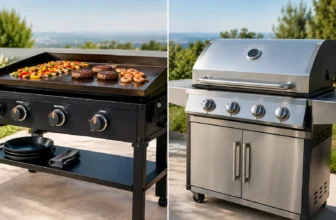

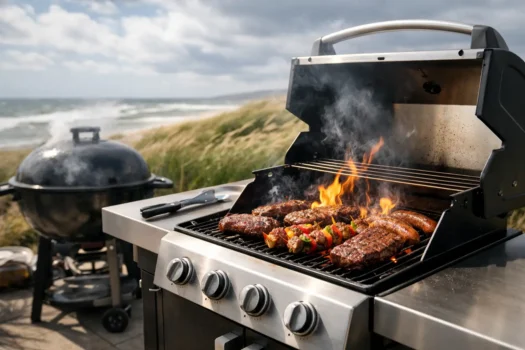
A steady 15 mph breeze can turn an ordinary backyard grill into a frustrating machine. Burners struggle to stay lit, grill temperatures swing, and the food nearest the windward side cooks at a different pace than everything else. The best grills for windy areas are not simply the models with the biggest BTU number. They are grills with a well-built firebox, a lid that closes tightly, meaningful heat retention, and controls that still respond when the weather is working against you.
No grill should be operated in an unsafe location or directly exposed to severe gusts. But if your patio, deck, cabin, or open yard gets regular wind, choosing the right cooker can make the difference between fighting dinner and cooking it.
What Makes a Grill Work in Wind
Wind attacks a grill in two ways. First, it strips heat from the cooking chamber and pushes hot air out through every opening. Second, on gas grills, it can interfere with the burner flame itself. A grill may still technically light, but a weak or erratic flame produces cold zones, flare-ups, and long preheat times.
A heavy lid and thick cook box matter more than shiny cabinet panels. So does the fit of the lid. A little venting is normal, but a loose lid gives wind an easy path through the grill. Deep fireboxes also help because the burners and heat deflectors sit farther below the cooking grate, where they are less exposed.
For charcoal and ceramic grills, thermal mass is the advantage. Thick ceramic or insulated steel stores heat and changes temperature slowly. That makes these grills naturally better at resisting wind than thin-walled kettle grills, although airflow management can still take practice.
Pellet grills can work in a breeze, but they deserve more caution. Their fans and electronic controllers are designed around controlled airflow. Strong crosswinds can pull heat from the barrel, affect combustion, and make the controller work harder. An insulated pellet grill in a protected spot is usable. An entry-level, thin-steel pellet grill in an open field is usually a poor match.
Best Grills for Windy Areas: Our Practical Picks
The right choice depends on whether you want fast weeknight grilling, live-fire cooking, smoking, or one cooker that handles several jobs. These are the designs and models that make the most sense for homeowners dealing with routine wind.
Weber Summit Kamado E6: Best Overall for Heat Retention
The Weber Summit Kamado E6 is one of the strongest all-around choices for a windy backyard because its insulated, double-walled steel body holds heat far better than a standard kettle. It heats faster than a ceramic kamado, uses less charcoal than many open metal grills, and has a more forgiving hinge and lid arrangement than a heavy ceramic cooker.
It is especially good for people who grill burgers and chicken but also want long, stable cooks for ribs, pork shoulder, or brisket. Once it is settled at temperature, normal wind has less influence than it would on a conventional charcoal grill.
The trade-off is price and size. It is not a budget charcoal grill, and it is more cooker than a casual buyer needs for a few burgers each month. But for long-term ownership in exposed conditions, the insulation is doing real work, not just decorating the spec sheet.
Kamado Joe Classic II: Best for Serious Charcoal Cooks
A ceramic kamado remains one of the safest bets for cooking consistency in wind. The Kamado Joe Classic II has thick ceramic walls, a tight-fitting lid, and adjustable vents that allow very controlled airflow once the charcoal is established. Wind may influence the initial setup, but the cooker’s stored heat helps it recover and stay steady.
This is a strong fit for buyers who value charcoal flavor, low-and-slow capability, and the ability to sear at very high heat. It is also a practical choice for climates where wind comes with cool temperatures, since ceramic insulation reduces fuel waste.
The ownership downside is straightforward: ceramic is heavy and breakable. Moving it around a deck is not a one-person task, and a hard impact can damage the body. It also requires more time and fire-management skill than gas. Buy it for cooking performance, not because it looks impressive on a patio.
Weber Genesis: Best Gas Grill for Everyday Use
For most homeowners who want gas convenience, a Weber Genesis is a sensible starting point. Its cook box is deep, the lid is substantial, the burners are protected by flavorizer bars, and replacement parts are generally easier to find than with many competing gas grills. Those details matter more in the sixth year of ownership than a side burner you barely use.
A Genesis will not hold heat like a kamado, and no gas grill is immune to direct gusts. Still, its burner system and solid overall construction make it more dependable than lightweight cart grills with shallow fireboxes. For weekday chicken, vegetables, burgers, and reverse-seared steaks, it offers quick recovery and easy adjustment.
Choose a location that keeps wind from blowing directly into the front or rear venting areas. Do not block those vents with homemade wind shields or place the grill against siding, railings, or combustible walls. Better placement is safer than trying to modify the grill’s airflow.
Napoleon Prestige 500: Best Gas Grill for High-Heat Cooking
The Napoleon Prestige 500 is worth considering if you want a heavier-duty gas grill with strong searing performance. Its enclosed firebox, lid construction, and stainless steel cooking system give it a more substantial feel than many midrange gas grills. In a breezy setting, that extra structure helps retain usable heat while the burners recover after the lid is opened.
This model fits cooks who want a gas grill that can handle a crowd and who use high heat often. The side infrared burner can be useful, but it should not be the reason you buy the grill. Side burners are more exposed to weather and usually less useful than the main grilling surface.
The main trade-off is complexity. More burners and features mean more parts to clean, inspect, and maintain. If you mostly cook for two people, a simpler three-burner grill may be the better long-term purchase.
PK Grill Original: Best Compact Charcoal Option
The PK Grill Original uses cast aluminum rather than thin sheet steel, and that gives it a real advantage in variable weather. Its body resists rust, retains heat better than a basic kettle, and its four-vent design provides more control over airflow than many compact charcoal grills.
It is a good answer for smaller patios, tailgating setups, and buyers who want charcoal cooking without committing to a large kamado. The rectangular grate also makes indirect cooking easier than on some compact round grills.
Its limits are capacity and insulation. It is not built for large parties, and it will not match a ceramic cooker during a long winter smoke. But for a smaller grill that has to deal with regular breezes, it is far more capable than its simple appearance suggests.
Grills That Need More Protection
Thin portable gas grills, open brazier-style charcoal grills, and lightweight pellet grills are the hardest to recommend for exposed locations. They can be useful in calm weather, but wind exposes their limits quickly. A low price is not much of a bargain if every cook requires moving the grill, relighting burners, or accepting uneven food.
Standard kettle grills can still work well, particularly for direct grilling. They are affordable, easy to maintain, and familiar to many owners. Just set expectations correctly. Their thin steel and relatively open vent path mean more temperature changes in wind, especially during indirect cooking. A kettle is a good value in a moderately protected yard, not the best tool for a consistently exposed one.
Setup Matters as Much as the Grill
Even the best-equipped grill needs a sensible location. Place it where a fence, masonry wall, or purpose-built noncombustible windbreak can reduce direct gusts without trapping smoke or heat. Maintain the grill manufacturer’s required clearance from walls, railings, roof overhangs, and combustible surfaces.
Avoid using improvised shields made from plywood, patio furniture, tarps, or loose metal sheets. They can create a fire hazard, concentrate heat where it does not belong, or blow into the grill. If burner flames repeatedly lift, sputter, or go out, stop cooking and move the grill to a safer, more protected location.
Keep the lid closed whenever practical. Every lid opening lets stored heat escape, and wind makes recovery slower. On charcoal grills, use the vents deliberately rather than opening them wide to chase temperature. On gas grills, preheat longer and give the grate time to recover between batches of food.
A grill cover also matters, though it will not solve a cooking problem. Wind-driven rain and debris shorten the life of ignition systems, burners, and exterior finishes. Secure the cover correctly when the grill is cool, and remove standing water or leaves from around the cart before cooking.
The best purchase is usually the grill that suits both your weather and your cooking habits. If wind is a constant problem, prioritize insulation, lid fit, and firebox construction before extra burners, flashy finishes, or app controls. A well-sited kamado or a properly built gas grill will give you more reliable meals than a feature-packed bargain model that loses its heat every time the breeze picks up.